


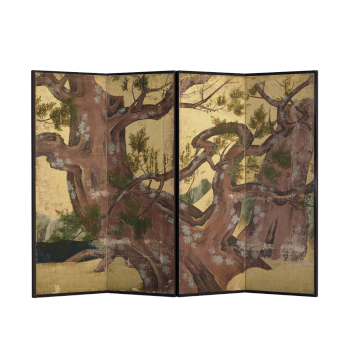
Kano Nagatoku's "The Cypress Screen" (right) - Tokyo National Museum
It is one of the representative works of the famous Japanese painter Nagatoku Kano during the Momoyama period, known for its magnificent obstacle screen painting style. Created in the late 16th century, it is an outstanding representative of art from the Azuchi Momoyama period in Japan. The background of the painting is almost covered with gold foil, highlighting the vigorous branches of the cypress tree. Kano Nagatoku inherited the painting style of his grandfather Kano Motonobu, blending ink paintings from China with colorful paintings from Japan, creating a powerful yet magnificent painting style that was deeply loved by military commanders at that time., Currently housed in the National Museum of Tokyo, it is an indispensable and valuable resource for studying the history of Japanese painting.

Kano Nagatoku's "The Cypress Screen" (left) - Tokyo National Museum
It is one of the representative works of the famous Japanese painter Nagatoku Kano during the Momoyama period, known for its magnificent obstacle screen painting style. Created in the late 16th century, it is an outstanding representative of art from the Azuchi Momoyama period in Japan. The background of the painting is almost covered with gold foil, highlighting the vigorous branches of the cypress tree. Kano Nagatoku inherited the painting style of his grandfather Kano Motonobu, blending ink paintings from China with colorful paintings from Japan, creating a powerful yet magnificent painting style that was deeply loved by military commanders at that time., Currently housed in the National Museum of Tokyo, it is an indispensable and valuable resource for studying the history of Japanese painting.

Japanese Screen - Xiangyun
Also known as "screen painting" or "screen", it is an important form of traditional Japanese art. Originating in China, it later spread to Japan and gradually developed a unique Japanese style. It is usually composed of multiple connected screens that can be folded and unfolded for easy carrying and storage. The materials of screens are diverse, including paper, silk, wood, etc. They are often painted with patterns of mountains, rivers, flowers, birds, and figures, reflecting Japan's natural scenery and cultural characteristics. Although the practicality of screens has weakened, their artistic and decorative qualities are still loved by people.

Japanese Screen - Flower Butterfly
Also known as "screen painting" or "screen", it is an important form of traditional Japanese art. Originating in China, it later spread to Japan and gradually developed a unique Japanese style. It is usually composed of multiple connected screens that can be folded and unfolded for easy carrying and storage. The materials of screens are diverse, including paper, silk, wood, etc. They are often painted with patterns of mountains, rivers, flowers, birds, and figures, reflecting Japan's natural scenery and cultural characteristics. Although the practicality of screens has weakened, their artistic and decorative qualities are still loved by people.
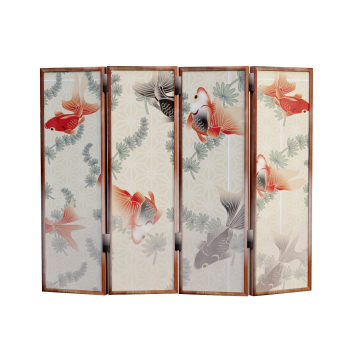
Japanese Screen - Goldfish
Also known as "screen painting" or "screen", it is an important form of traditional Japanese art. Originating in China, it later spread to Japan and gradually developed a unique Japanese style. It is usually composed of multiple connected screens that can be folded and unfolded for easy carrying and storage. The materials of screens are diverse, including paper, silk, wood, etc. They are often painted with patterns of mountains, rivers, flowers, birds, and figures, reflecting Japan's natural scenery and cultural characteristics. Although the practicality of screens has weakened, their artistic and decorative qualities are still loved by people.
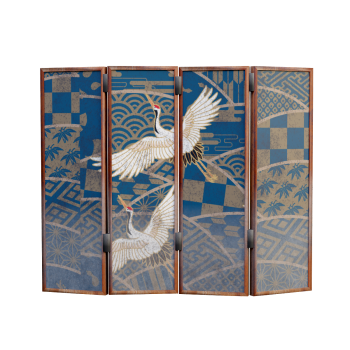
Japanese Screen - Red crowned Crane
Also known as "screen painting" or "screen", it is an important form of traditional Japanese art. Originating in China, it later spread to Japan and gradually developed a unique Japanese style. It is usually composed of multiple connected screens that can be folded and unfolded for easy carrying and storage. The materials of screens are diverse, including paper, silk, wood, etc. They are often painted with patterns of mountains, rivers, flowers, birds, and figures, reflecting Japan's natural scenery and cultural characteristics. Although the practicality of screens has weakened, their artistic and decorative qualities are still loved by people.

The Pine Forest Screen Painting - Tokyo National Museum
The Pine Forest Painting "is one of the representative works of famous Japanese painters such as Hasegawa. Created in the late 16th century during the Azuchi Momoyama period, it is a large screen painting consisting of six panels. The painting is drawn in ink on paper and then pasted onto a wooden frame, depicting a pine forest shrouded in mist, with snow capped mountains faintly visible in the distance. Using black ink, create rich visual effects by mixing and combining different stroke lengths, intensities, and humidities. With its unique composition and style, it reflects an important contribution to the traditional Japanese ink painting and is a milestone in the history of Japanese art. The painting is currently housed in the National Museum of Tokyo.

Popular Models
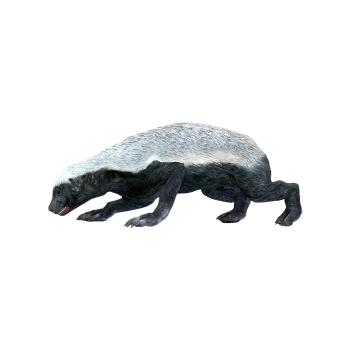
Honey Badger (3D animated model)
192 View
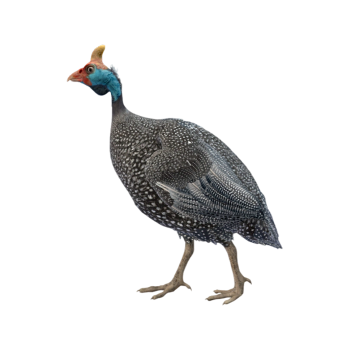
Guinea fowl (3D animated model)
163 View
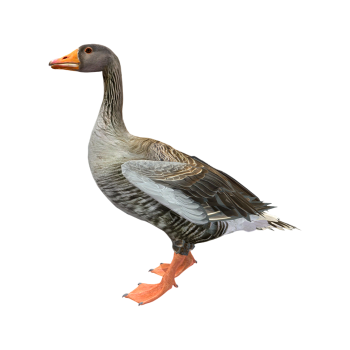
Wild Goose (3D animated model)
185 View
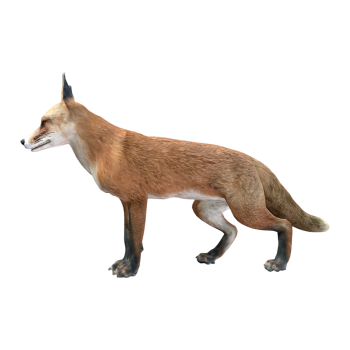
Red Fox (3D animated model)
153 View
Random Model

Playseat driving simulator seat
1899 View

3D model of construction night light
988 View


Zhang Fei - Dark Wood Carving
889 View

Sony WH-H900N Twilight Red
1017 View
